

Smart Energy Market to Reach US$ 417.7 Billion Driven by 15.8% CAGR and Rising US$ 470 Billion Grid Investments
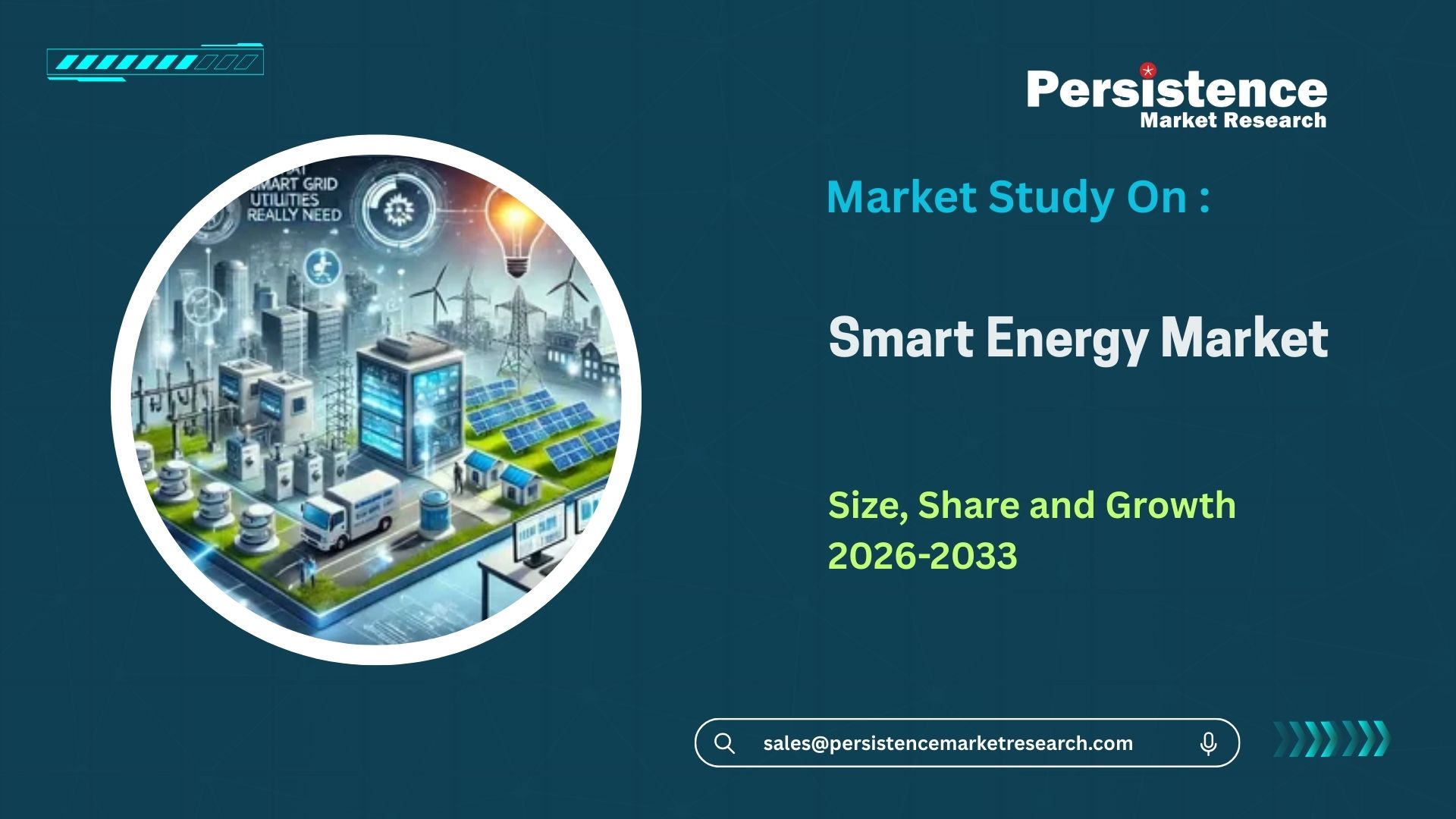
Smart Energy Market
LONDON, LONDON, UNITED KINGDOM, February 25, 2026 /EINPresswire.com/ -- The Smart Energy Market is undergoing a transformative phase as countries across the globe prioritize energy efficiency, digital grid infrastructure, and sustainable power generation. Smart energy solutions integrate advanced digital technologies with traditional energy systems to enhance reliability, reduce operational inefficiencies, and support renewable integration. With growing urbanization, electrification of transport, and rapid digitalization of industries, the demand for intelligent energy systems continues to expand at an unprecedented pace.
According to the latest study by Persistence Market Research, the global smart energy market size is likely to be valued at US$ 156.1 billion and is projected to reach US$ 417.7 billion by the forecast period, growing at a CAGR of 15.8%. This robust expansion is driven by accelerating electricity demand growth, which surged 4.3% globally according to the International Energy Agency, alongside unprecedented grid modernisation investments exceeding US$ 470 billion annually.
Download Your Free Sample & Explore Key Insights : https://www.persistencemarketresearch.com/samples/36185
Rising Electricity Demand and Grid Modernization
One of the primary forces fueling the smart energy market is the sharp increase in global electricity consumption. Rapid industrialization, expansion of digital infrastructure such as data centers, and increasing adoption of electric vehicles are placing significant pressure on aging grid systems. Governments and utilities are investing heavily in grid modernization projects to enhance transmission efficiency, reduce outages, and integrate distributed energy resources. Smart grids equipped with real time monitoring, automated distribution controls, and predictive maintenance systems are becoming essential to meet these challenges. These advanced systems improve grid resilience and enable faster response to disruptions, ensuring a stable energy supply in an increasingly electrified world.
Transition Toward Renewable and Distributed Energy Resources
The global push toward renewable energy adoption has further strengthened the case for smart energy solutions. Solar, wind, and other renewable sources require advanced grid management systems to balance intermittent supply with fluctuating demand. Smart energy technologies facilitate better forecasting, load balancing, and integration of distributed energy resources into the main grid. Energy storage systems and renewable management platforms are playing a pivotal role in stabilizing power networks. These technologies allow excess renewable energy to be stored and dispatched during peak demand, reducing reliance on fossil fuel based generation and supporting decarbonization goals.
Customize This Report for Your Exact Requirements : https://www.persistencemarketresearch.com/request-customization/36185
Market Segmentation
The smart energy market demonstrates a diversified structure across multiple segments that reflect technological depth and end user diversity.
By Component Type
•Hardware
•Software
•Services
By Solution Type
•Smart Metering (AMI)
•Smart Grid & Distribution Automation
•Energy Management Systems (EMS)
•Renewable & DER Management
•Energy Storage Systems
•EV Charging Infrastructure
•Demand Response & Flexibility
•Misc.
By Deployment Mode
•On-premises
•Cloud
•Hybrid
By End User
•Utilities
•Residential
•Commercial
•Industrial
By Region
•North America
•Europe
•East Asia
•South Asia Oceania
•Latin America
•Middle East & Africa
Regional Growth Dynamics
North America remains a leading region in the smart energy market due to significant investments in grid modernization and advanced metering infrastructure. Supportive regulatory frameworks and high renewable penetration contribute to sustained demand for smart energy technologies.
Europe follows closely, driven by strong climate policies and aggressive renewable targets. Countries across the region are investing in digital grid systems to meet carbon neutrality goals and improve energy security.
East Asia and South Asia Oceania are experiencing rapid growth fueled by expanding urban populations, industrialization, and large scale renewable installations. Meanwhile, Latin America and the Middle East and Africa are gradually embracing smart energy solutions to enhance grid stability and diversify energy portfolios.
Digital Transformation and Energy Management Innovation
Digital transformation is at the core of the smart energy revolution. Advanced analytics, artificial intelligence, and internet connected devices are enabling real time monitoring and intelligent decision making. Energy management systems empower businesses and households to track consumption patterns, optimize usage, and reduce electricity bills. Demand response programs are also gaining popularity as utilities seek to balance load during peak periods. By incentivizing consumers to adjust usage patterns, these programs enhance grid efficiency and minimize infrastructure strain.
Competitive Landscape and Company Insights
The smart energy market is highly competitive, with global technology leaders investing heavily in innovation, partnerships, and acquisitions to strengthen their market position. Key players focus on developing integrated platforms that combine hardware, software, and analytics capabilities.
Checkout Now & Download Complete Market Report : https://www.persistencemarketresearch.com/checkout/36185
Company Insights include:
✦ ABB
✦ General Electric Company
✦ Holley Technology Ltd.
✦ Honeywell International Inc.
✦ Iskraemeco Group
✦ Itron Inc.
✦ Landis+Gyr
✦ Schneider Electric
✦ Sensus
✦ Siemens
These companies are actively expanding product portfolios and entering strategic collaborations to enhance digital grid capabilities and energy efficiency solutions.
Future Outlook and Market Potential
Looking ahead, the smart energy market is poised for sustained double digit growth driven by electrification trends, renewable expansion, and infrastructure modernization. Integration of electric vehicle charging networks, decentralized power generation, and advanced storage technologies will further accelerate adoption. As governments intensify efforts to achieve net zero targets and ensure energy resilience, smart energy systems will become indispensable. The convergence of digital intelligence with sustainable energy infrastructure is set to redefine how power is generated, distributed, and consumed globally. In conclusion, the Smart Energy Market represents a dynamic and rapidly evolving industry that sits at the intersection of technology and sustainability. With projected growth to US$ 417.7 billion and a strong CAGR of 15.8%, the market offers substantial opportunities for technology providers, utilities, and investors committed to shaping the future of global energy systems.
Explore More Related Reports :
Tungsten Carbide Powder Market : The global tungsten carbide powder market size is likely to be valued at US$ 18.2 billion in 2026 and is projected to reach US$ 27.5 billion by 2033, growing at a CAGR of 6.1% between 2026 and 2033.
Solar PV Panels Market : The global solar PV panels market size is likely to be valued at US$212.7 billion in 2026 and is expected to reach US$357.5 billion by 2033, growing at a CAGR of 7.7% during the forecast period from 2026 to 2033
Persistence Market Research
Persistence Market Research Pvt Ltd
+1 646-878-6329
email us here
Visit us on social media:
LinkedIn
Instagram
YouTube
X
Legal Disclaimer:
EIN Presswire provides this news content "as is" without warranty of any kind. We do not accept any responsibility or liability for the accuracy, content, images, videos, licenses, completeness, legality, or reliability of the information contained in this article. If you have any complaints or copyright issues related to this article, kindly contact the author above.
